




Benefits of Early Childhood Education

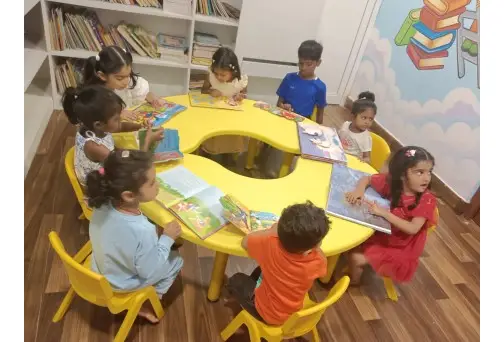
Every parent wants to give their child the best possible start in life. The early years are a crucial time for brain development and building lifelong habits. Enrolling your child in a quality learning program can make a big difference in their future success.
What are the benefits of early childhood education?
Early childhood education is a formal learning program for children from birth to age eight. The main benefits include improved social skills, better emotional regulation, strong foundational literacy, and increased independence. It prepares children for primary school and helps develop critical thinking from a young age.
Why Early Childhood Education Matters
A child's brain grows faster in the first five years than at any other time in life. During this window, kids are like sponges; they absorb information from their environment, their peers, and their caregivers.
Early childhood education provides a safe, structured place for this growth. It is not just about learning the alphabet or counting to ten. It is about teaching children how to learn. At CK Wonder Kidz, for example, programs like the Power of Concentration (POC) and Brain Gym are designed specifically to build this kind of deep, self-directed learning from a very young age. When kids are encouraged to be curious, they develop a lifelong love for discovery.
Top Benefits of Early Learning Programs
Sending your child to a structured learning environment offers several well-documented advantages:
-
Better Social Skills: Children learn how to share, take turns, and cooperate with others. Initiatives like Student Led Conferences (SLC), where children present their own learning to parents, take this a step further by building confidence and communication skills early.
-
Emotional Growth: Being away from parents helps children build independence and self-confidence. They also learn how to manage their feelings in a group setting.
-
Cognitive Development: Through guided play, kids develop problem-solving skills. They learn to follow instructions and complete simple tasks.
-
Routine and Structure: A consistent daily schedule helps children feel secure. Understanding routines makes the eventual jump to kindergarten much easier.
Key Skills Developed in the Early Years
Different activities in an early learning center target specific areas of a child's growth. Here is a quick breakdown of how play translates into real skills:
|
Skill Area |
Example Activity |
Primary Benefit |
|
Social |
Group games and circle time |
Teamwork, sharing, and empathy |
|
Motor |
Drawing, building blocks, and crafts |
Improved hand-eye coordination |
|
Cognitive |
Puzzles and storytelling |
Memory building and problem-solving |
|
Language |
Singing songs and reading aloud |
Clearer speech and larger vocabulary |
Practical Insights for Parents
Navigating the early education phase can be overwhelming. Here are a few practical insights to keep in mind:
-
Common Mistake: Pushing academics too early. Many parents look for programs that force reading and writing on toddlers. At this age, play-based learning is far more effective than strict memorization.
-
What Most People Miss: Emotional regulation is just as important as academic readiness. A child who knows how to handle frustration and work in a group is often better prepared for school than one who only knows their ABCs.
-
Pro Tip: Always visit a center during active hours. Watch how the teachers interact with the children. A noisy, busy, and happy classroom is usually a great sign. To know exactly what to look for, use our preschool safety checklist for parents. It covers environment, hygiene, staff behaviour, and more.
-
When to go slow: If your child has severe separation anxiety, a sudden jump into a full-time program might be too stressful. Consider a gradual transition or a part-time schedule first. CK Wonder Kidz offers flexible daycare and program options that allow for exactly this kind of gentle start.
Finding the Right Fit for Your Child
Choosing the right environment depends on your child's age, temperament, and your family's needs. One of the first questions most Chennai parents face is the teaching philosophy itself: should you opt for a Montessori-style approach or a more structured traditional setup? Our in-depth guide on Montessori vs. traditional preschool in Chennai breaks this down so you can choose with confidence.
For working parents in the city, safety and consistency are top priorities. CK Wonder Kidz's daycare program accepts children from as young as 3 months, with CCTV surveillance, a secure campus, and trained caregivers, making it one of the most trusted options for daycare in Raja Annamalaipuram, Chennai. For older children ready for structured learning, the school's age-graded programs (Aquilla through Orion) follow a play-based curriculum that builds steadily toward school readiness.
If you are planning for the upcoming academic year, our preschool admission guide walks you through timelines, what to ask during visits, and how to evaluate the best preschool in Chennai for your child.
Take your time, ask questions, and trust your instincts.
Frequently Asked Questions (FAQs)
- At what age should early childhood education start?
Most early childhood education programs start around age two or three. However, learning begins at birth. High-quality daycares like CK Wonder Kidz offer structured activities for infants and toddlers from as early as 3 months, while formal preschool usually begins around age three. - Is preschool really necessary for my child?
While not legally required, preschool is highly recommended. It helps children develop social skills, emotional control, and a basic understanding of letters and numbers. Children who attend preschool consistently show an easier adjustment to kindergarten and formal schooling. - What is the difference between daycare and preschool?
Daycare primarily provides safe supervision and care for children while parents work, often accepting infants. Preschool focuses more on early education and school readiness for children ages three to five. Many quality schools, including CK Wonder Kidz, combine both, offering structured curriculum within a safe daycare environment. - How do children learn in early education programs?
Children learn best through play. Early education programs use games, songs, storytelling, and hands-on activities to teach concepts. This play-based approach keeps kids engaged and helps develop fine motor skills, language, and problem-solving abilities naturally.